

Volume III, Issue VI


|
Heather Clayton, the author of Making the Common Core Come Alive!, is the principal of Mendon Center Elementary School in Pittsford Central School District, New York. She is also a co-author of Creating a Culture for Learning published by Just ASK. |

Making Parents Your
Common Core Partners
– James Thurber
Education is in the throes of significant change. As of today, forty-three states and the District of Columbia have adopted the Common Core State Standards, which represent a transition to rigorous standards for all students Kindergarten through twelfth grade in English Language Arts and mathematics. As these standards are being implemented across the country, teachers have been working diligently to understand the implications for teaching and learning.
Another critical facet of the implementation of Common Core is the educating of our parents so that they can work in tandem with us to achieve great things for students. Our parents need to understand how their children are performing in school against the identified standards, as well as the meaning behind those standards. This issue is designed as a tool to assist schools and districts in getting their Common Core message out to parents. An extensive list of online resources is included.
Tips for Districts and Schools
Rely on multiple means of communication.
For parents to truly understand the Common Core and the changes it represents, they need to hear messages more than once and in a variety of modes and contexts. Parents should have the opportunity to:
- see information in writing via newsletters or other correspondence from the school
- hear the information firsthand from teachers and administrators during PTA meetings, parent coffee hours, or parent evenings
- view video clips that outline important ideas behind the Common Core
- see footage from exemplary classrooms where the Common Core is being implemented
By using diverse means to communicate information, educators can reach a broader audience and deepen understanding.
Keep the Common Core message consistent and focused on students.
When communicating your message about the Common Core, the message should focus on all of the reasons that these high quality, research-based standards are designed to prepare students for a world beyond high school. It is important for parents to know that the Common Core State Standards:
- are rigorous and focus on the application of knowledge
- are evidence-based
- are vertically aligned and represent a “staircase of complexity”
- ensure that all students are preparing for college and careers, regardless of where they live
- allow for schools and districts to share resources, teaching and assessment practices, and instructional strategies
Do your homework and learn the misconceptions that exist.
When educating parents about the Common Core, a number of misconceptions are likely to surface. By understanding these misconceptions ahead of time, educators will be better prepared to provide clarification, answer questions, and build understanding in the parent community.
Common Core MisconceptionsFor information about misconceptions and the Common Core, see the issue of Making the Common Core Come Alive! entitled “Common Misconceptions about the Common Core.” |
Show parents what the Common Core looks like in classrooms.
There comes a time when we need to make the shift from explaining what the Common Core looks like to actually showing parents the changes in teaching and learning. This can be done by showing parents activities that might be done in class, sharing video footage of classrooms in action, or sharing examples of student work. When parents can see the rich interactions between our teachers and students along with the quality work produced every day in our classrooms, then they can begin to comprehend the significance of the Common Core.
When we consistently communicate a clear, student-centered message about the standards and support that message with examples, parents will better understand their role in supporting their child”™s learning and development.
Key Points for Parents
|
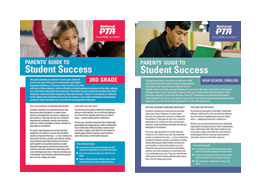
Featured Resources for Parents Parents’ Guides to
|
Standards tell us what students are expected to know and understand at the end of each grade level. Standards are a guarantee that all students are expected to achieve at the same level, regardless of which teacher they have or where they live. They allow us to have clear goals for instruction and meaningful professional development for teachers. Rather than relying on instinct alone, teachers have multiple measures of evidence that support how students are performing in relation to the standards. Having standards removes ambiguity and allows parents to know what teachers are teaching, what students are learning, and how their child”™s performance will be measured.
The Common Core Standards are more rigorous than many former state standards, therefore the assessments have been ratcheted up to align with those standards. For instance, in English Language Arts, parents can expect to see a greater presence of authentic, nonfiction texts, a higher level of text complexity, pairs of passages, a focus on evidence from the text, and a high level of academic vocabulary. In mathematics, parents can expect to see a narrowed focus on specific concepts, links back to previous years”™ learning, and the need to model or represent the mathematics in a variety of ways.
The purpose of the newer Common Core aligned assessments is to provide a more accurate measure of how proficient students are with the knowledge and skills they need to be college and career ready. With higher standards comes more rigorous assessment, so parents can likely expect a dip in scores as the recalibration occurs. It”™s not that our students have shown regression, but rather a more accurate reflection of where students stand as in relation to the new standards.
The Common Core Standards are not a representation of “what we”™ve always done,” or merely the combining or resorting of existing standards. For their effective implementation, the Common Core Standards require fundamental shifts in instruction and pedagogy. It is important that parents understand how the Common Core differs from previous standards and the shifts that are necessary.
In English Language Arts (ELA) and through literacy across the curriculum students must”¦
Read complex texts to grow vocabulary and language.
In order to be ready for college and career, students need to be able to navigate texts that are complex. Therefore, the standards build a staircase of complexity, where students are closely reading texts of increasing difficulty. The standards also require students to expand their academic vocabulary, or words that appear in different content areas such as science, social studies, and history. Through reading, writing, listening, and speaking, students build a repertoire of words, phrases, and conventions that enhance their learning in all curricular areas.
|
|
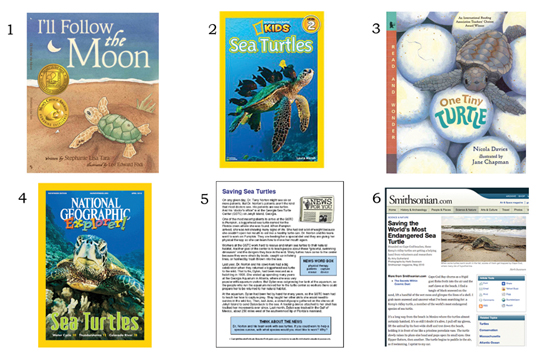 Same Topic Text Set with Increasing Complexity
Read, write, and speak using evidence from both literary and nonfiction texts.
In the past, students may have been asked to answer questions that relied solely on their prior knowledge or experiences. Now, with the Common Core, students are required to answer questions that depend on their careful reading of texts. For instance, students are asked “text dependent” questions that expect them to infer, analyze, and apply information from what they have read. In both reading and writing, it is essential that students substantiate their claims using relevant text-based evidence. With the shift to Common Core, students are still writing narratives, however the emphasis lies on argumentation, persuasion, and informational writing.
Build background knowledge through the reading of nonfiction.
An important idea embedded in the Common Core is that students should be knee deep in learning about their world through the reading of content-rich nonfiction. In grades K-5, the Common Core expects that during students”™ educational experiences there should be a 50/50 balance between nonfiction and literary reading, where in grades 6-12, there would be an 80/20 balance between nonfiction and literary reading. The standards maintain a clear focus on the study of literature and also explicitly state that students should be engaged in gaining background knowledge in history/social studies, science, and technical subjects through access to content-rich nonfiction.
Examples of evidence-based reading/writing tasks from NYC Department of Education
Sample ELA Grade 2 Task
Students independently write an informational piece on a community of their choice after reading and responding to informational texts about rural, suburban, and urban communities. The students will be supported in charting information from shared and independently read texts and will be involved in guided and interactive practices on how to organize their writing.
Sample ELA Grade 9 Task
Students write an argumentative essay in which they make a case for the speaker who they think makes the strongest argument to promote racial equality. Students consider each speaker”™s use of claim, counterclaims, evidence, and methods when making their determination.
In mathematics students must”¦
Learn content at a deeper, focused level. (Focus)
Time is spent differently in math classrooms, where students are focused on essential work at each grade level. Rather than a rush through content, students are gaining a deeper conceptual understanding of fewer concepts, a strong foundation, and a higher level of procedural fluency. As a result, students are better prepared to solve real world problems that deal with novel ideas.
Make connections between concepts. (Coherence)
The Common Core Standards in mathematics are designed as a coherent progression from grade to grade. Each year students can connect to previous learning and build new understandings. The work students complete grows in its sophistication and depth as the years”™ progress.
Pay equal attention to concepts, procedures, fluency, and application. (Rigor)
The standards expect that classrooms pursue three aspects of the mathematics with the same intensity. Students must understand concepts in a variety of different contexts, possess speed and accuracy with their math computation, and apply the math in novel situations.
K-8 Standards for Mathematical PracticeIn addition to the Standards for Mathematical Content there are also Standards for Mathematical Practice. These standards, common across grades K-8, represent what it means to “do” mathematics and apply mathematical content. They outline the kind of thinking students do as they are learning the content and exemplify how we want our children to engage with the mathematics. Much of the success with these standards is measured in seeing how students work with one another to justify, debate, explain, reason, and defend their work.
|
Examples of math tasks taken from NYC Department of Education
Sample Math Grade 3 Task
Students will partition the school garden to make equal parts for each class. Students must illustrate their knowledge of fractions through area models, fractional sets, and number lines.
Sample Math Grade 9 Task
Students will show their ability to interpret and compute quotients of fractions in a real world problem about sharing candy bars. Students may choose to perform the division of the fractions using either visual models or numerical symbols.
Quick Tips for Supporting Learning at Home
Focus on evidence
- Have your child reference the text in discussions about texts he has read.Expect evidence in everyday discussions and/or disagreements
Frequently use evidence-based language like”¦- For example”¦
- For instance”¦
- Because”¦
- Based on what I read”¦
- The author stated”¦
- According to the text”¦
- On page ____, it said”¦
- From the reading I know that”¦
Balance your child”™s reading diet by including acclaimed age-appropriate literary works, various genres, and nonfiction text
- Encourage and model reading for pleasure, insight, and information
- Engage your child in reading functional text like directions for games or product assembly, recipes, or maps
- Provide exposure to a variety of books so that your child can develop skillfulness in choosing classic literature and books from different genres that she wants to read, for pleasure, insight, or information
- When your child is reading nonfiction, point out and ask questions about the different ways nonfiction text is organized and the different features that help readers (subheadings, bold print, captions, maps, charts, tables, graphs, etc.)
- Introduce books that your child might not select on their own
Ask the right questions
When supporting your child with homework, focus on asking questions to promote reflection rather than showing your child how to do the work. This is especially important in mathematics, where if you teach a concept incorrectly or too soon, it could solidify misconceptions for years to come.
Sample questions to ask your child during math homework:
- What is this problem asking?
- Have you solved similar problems before?
- Can you think of a number sentence (equation) to match the story (situation)?
- What tools can help you solve this problem?
- Is your answer reasonable?
- What is challenging about this problem?
Sample questions to ask your child during reading/writing homework:
- What was confusing?
- What questions would you ask the author?
- What helped you to understand the reading?
- What connections can you make to your reading?
- What was the main idea of the text? (nonfiction)
- How was the text organized? (nonfiction)
- How did the character change in the story? (fiction)
- What kind of person is _________? Why? (fiction)
- Where did you find evidence to support your thinking? (writing)
- What evidence are you using to support your ideas? (writing)
Read, write, and speak using evidence from both literary and non-fiction texts.
In the past, students may have been asked to answer questions that relied solely on their prior knowledge or experiences. Now, with the Common Core, students are required to answer questions that depend on their careful reading of texts. For instance, students are asked “text dependent” questions that expect them to infer, analyze, and apply information from what they have read. In both reading and writing, it is essential that students substantiate their claims using relevant text-based evidence. With the shift to Common Core, students are still writing narratives, however the emphasis lies on argumentation, persuasion, and informational writing.
Build background knowledge through the reading of non-fiction.
The idea behind the Common Core is that students are knee deep in learning about their world through the reading of content-rich nonfiction. In grades K-5, the Common Core expects a 50/50 balance between nonfiction and literary reading, where in grades 6-12, there should be an 80/20 balance between nonfiction and literary reading. The standards still pay attention to literature, however the standards for literacy in history/social studies, science, and technical subjects ensure students are gaining background knowledge in these subjects.
Library of Making the Common Core Come Alive!
- Common Misconceptions About the Common Core
-
Mathematical Practice One: Make Sense of Problems and Persevere in Solving Them
-
The Thinking Behind the Content: Standards for Mathematical Practice
Access other Common Core resources in the Just ASK Resource Center
Resources found there include links to blogs, teacher-authored units, copyright-free tools and templates for lesson and unit design and for classroom tools.
Resources for Parents and Studentswww.justaskpublications.com/just-ask-resource-center/e-newsletters/mccca/mccca-library/ www.engageny.org/resource/common-core-shifts www.dpi.state.nc.us/acre/standards/common-core-tools/#unpacking www.engageny.org/parent-family-library www.youtube.com/watch?v=5s0rRk9sER0 https://educationnorthwest.org/sites/default/files/resources/common-core-brief-parents.pdf www.pta.org/parents/content.cfm?ItemNumber=2583 www.engageny.org/parent-guides-to-the-common-core-standards www.cgcs.org/Page/328 www.cgcs.org/site/Default.aspx?PageID=244 https://achievethecore.org/common-core-intro-for-parents www.pta.org/advocacy/content.cfm?ItemNumber=4158 www.wgrz.com/story/news/local/2014/09/02/common-core-homework-helper/14925331/ |
Permission is granted for reprinting and distribution of this newsletter for non-commercial use only.
Please include the following citation on all copies:
Clayton, Heather. “Making Parents Your Common Core Partners.” Making the Common Core Come Alive! Volume III, Issue VI, 2014. Available at www.justaskpublications.com. Reproduced with permission of Just ASK Publications & Professional Development (Just ASK). ©2014 by Just ASK. All rights reserved.